In short
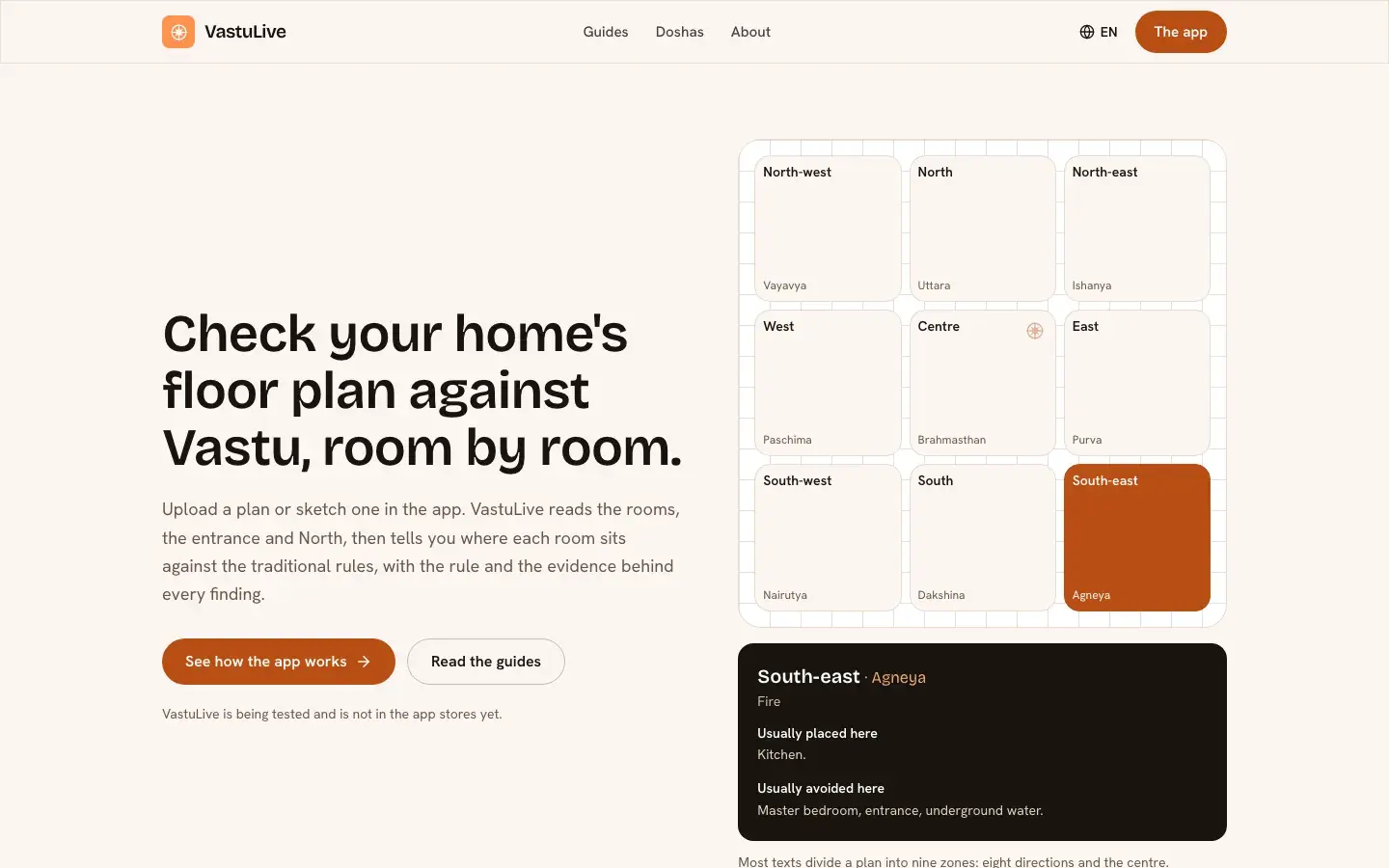
VastuLive checks a home’s floor plan against traditional Vastu rules, room by room. It reads the rooms, the entrance, and the north marking, then shows which rule applies to each room and the evidence behind it. The hard part was making every finding explainable and repeatable, not generated.
- Platforms
- iOS and Android app, plus a multilingual website
- Stack
- Flutter, Python (FastAPI), Next.js, Rules engine
- Status
- In testing; not in the app stores yet
- Site
- vastulive.com
Rules as data, not prompts
The Vastu rules live as fixed, versioned data that a scoring engine applies to a nine-zone grid laid over the plan. The same plan always produces the same report, and every finding names the rule it came from and the evidence it used.
An optional AI step can read a photographed plan into rooms, but it only produces input for the rules engine. It never decides the outcome. That split is the reason the reports can be trusted and debugged.
Finding north
A Vastu reading is only as good as its north. The app takes north from the plan’s own marking or from the phone’s compass, and it checks whether the compass reading can be trusted before using it, because phone compasses drift near steel and electronics. When the signal is poor, the app says so instead of guessing.
Advice that never breaks a wall
Suggestions are limited to non-structural changes: furniture, use of a room, colors, placement. The product will not tell anyone to demolish or rebuild. Constraining the output this way was a product decision first and an engineering rule second.
The server does not trust the app
Claims the app sends, such as where the main door is or which areas are outside, are checked again on the server before scoring. It is the same discipline we apply to any client API: the client is a convenience, the server is the source of truth.
What this means for your build
If your product makes judgments people will act on, keep the judgment deterministic and explainable, and use AI only to turn messy input into structured input. That pattern applies to compliance checks, eligibility, pricing, and quality scoring.